What You Need to Know Before You Ride
Few places in the American West offer a cycling experience quite like Joshua Tree National Park. Straddling the boundary between the Mojave and Colorado Deserts in Southern California, the park’s nearly 800,000 acres deliver a landscape unlike anything else — massive granite formations, twisted rock fields, and the park’s iconic namesake trees stretching across the high desert in every direction.
Whether you’re planning a casual ride along a paved scenic road or an ambitious multi-day dirt route through the backcountry, a little preparation goes a long way in a place this remote and this hot.
Entrance Fees
All cyclists entering the park must pay an entrance fee. As of 2026, the per-person rate for those arriving on foot or by bicycle is $15, valid for seven days. If you’re driving to a trailhead and unloading bikes, the standard private vehicle pass is $30 for seven days. A motorcycle pass runs $25.
Frequent visitors should consider the park’s annual pass at $55, or the America the Beautiful interagency pass at $80 for U.S. residents, which covers entrance fees at all national parks and hundreds of other federal recreation sites for a full year. Active military and dependents enter free, and Gold Star Families and veterans are eligible for a free lifetime pass.
Passes can be purchased online at recreation.gov in advance — recommended, since cell service inside the park is unreliable at best. The North and West entrance stations accept debit and credit cards only; no cash. The visitor centers and Cottonwood Visitor Center accept both.
There are also several fee-free days throughout the year open to U.S. citizens and residents, including Presidents Day, Memorial Day, the National Park Service birthday (August 25), and Veterans Day, among others.
Water: Bring More Than You Think
This cannot be overstated. There are no drinking fountains or water stations along the park’s interior roads. The desert environment is unforgiving, and the park’s infrastructure reflects that — water is available only at the park entrances and at a handful of campgrounds near those entrances. Of the park’s nine campgrounds, only Cottonwood, Black Rock, and Indian Cove have running water. Everything else is dry.
For a cycling trip inside the park, carry all the water you’ll need for the entire ride before you set out. Rangers and experienced desert cyclists typically recommend a minimum of one to two gallons per person per day depending on temperature and exertion level. On a hot day, that’s not a suggestion — it’s a survival guideline. Pack more than you think you’ll need, and consider an insulated bottle or hydration pack to keep it cooler longer.
What to Know About Cycling in the Park
Bikes are permitted on all paved and dirt roads open to motor vehicles — that’s both the scenic paved routes and roughly 100 miles of backcountry dirt tracks. However, cyclists are not permitted on hiking trails, despite what some older guides may suggest. The Hidden Valley Trail, for example, is a hiking-only path; bikes are prohibited. The same goes for the California Hiking and Riding Trail in the park’s northwest — the “riding” there refers to horses, not bikes.
There are no dedicated bike lanes anywhere in the park, and most paved roads lack a shoulder. Ride with traffic awareness and give vehicles plenty of room, especially on winding sections.
Routes Worth Riding
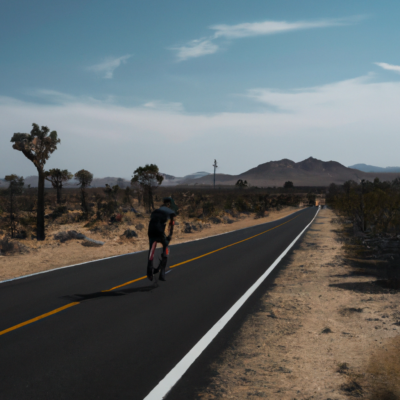
Park Boulevard Scenic Drive is the park’s main paved corridor and the backbone of most cycling itineraries. Running roughly 25 miles between the West and North entrances, it passes through the heart of the Mojave Desert section with views of boulder fields, Joshua tree groves, and several pullouts worth stopping for. The road has moderate rolling hills and is manageable for most fitness levels, though the lack of shade is constant.
Keys View Road is a paved out-and-back spur — not a loop — that climbs to an elevation of about 5,185 feet with sweeping views of the Coachella Valley, the Salton Sea, and on clear days, into Mexico. The climb is roughly five miles from the turnoff on Park Boulevard, with enough elevation gain to make it a solid workout. Descend carefully; the road is exposed and winds can be strong.
Geology Tour Road is a highlight for dirt-road and gravel cyclists. This roughly 18-mile out-and-back route (not a loop) drops south from Park Boulevard into the Squaw Tank area, passing through some of the park’s most interesting geological terrain. A high-clearance vehicle is recommended for the lower section if driving, but cyclists on wider tires handle it well. Carry extra water here — it’s remote, shadeless, and there’s nothing out there if something goes wrong.
Pinto Basin Road connects the main park corridor to the Cottonwood Visitor Center near the south entrance, passing through the lower-elevation Colorado Desert. The character of the landscape shifts noticeably here — Joshua trees give way to cholla, ocotillo, and palo verde. The Cholla Cactus Garden is located along this road and is worth a stop, but stay on the path; the jumping cholla lives up to its name.
Timing and Conditions
The ideal riding window is roughly October through April. Summer temperatures regularly exceed 100°F and have reached as high as 124°F in the Colorado Desert section. Heat stroke is a real and documented risk during summer months, and the lack of water access inside the park compounds that danger significantly. If you do visit in warmer months, start before sunrise and plan to be off exposed roads well before midday.
Spring — particularly March through early May — brings the best combination of mild temperatures and potential wildflower blooms, and is also peak visitation season. Expect more vehicle traffic on park roads.
Wildlife and Leave No Trace
The park supports a surprisingly diverse range of wildlife. Desert bighorn sheep, coyotes, mule deer, and desert tortoises all inhabit the area, along with a healthy population of reptiles including several rattlesnake species. Give animals space, especially if you’re moving quietly on a bike and encounter something on the road. Roadrunners are a reliable entertainment on almost any ride through the park.
Stay on designated roads and pack out everything you bring in. The desert ecosystem recovers slowly — tire tracks off-road can persist for years.
Quick Reference
| Pass Type | Cost | Valid |
|---|---|---|
| Private Vehicle | $30 | 7 days |
| Motorcycle | $25 | 7 days |
| Per Person (bike/foot) | $15 | 7 days |
| Annual (park only) | $55 | 12 months |
| America the Beautiful (residents) | $80 | 12 months |
Passes available at recreation.gov, visitor centers, and entrance stations. North and West entrance stations are card-only.
Joshua Tree rewards cyclists who come prepared. Get your water sorted, buy your pass before you lose cell service, and keep your ride within the window of cooler temperatures — the rest takes care of itself.